How Design Choices Impact Accumulating Prize Mechanisms in Mobile Gaming
Written by Elena Washington · Oct 14, 2026
How Design Choices Impact Accumulating Prize Mechanisms in Mobile Gaming
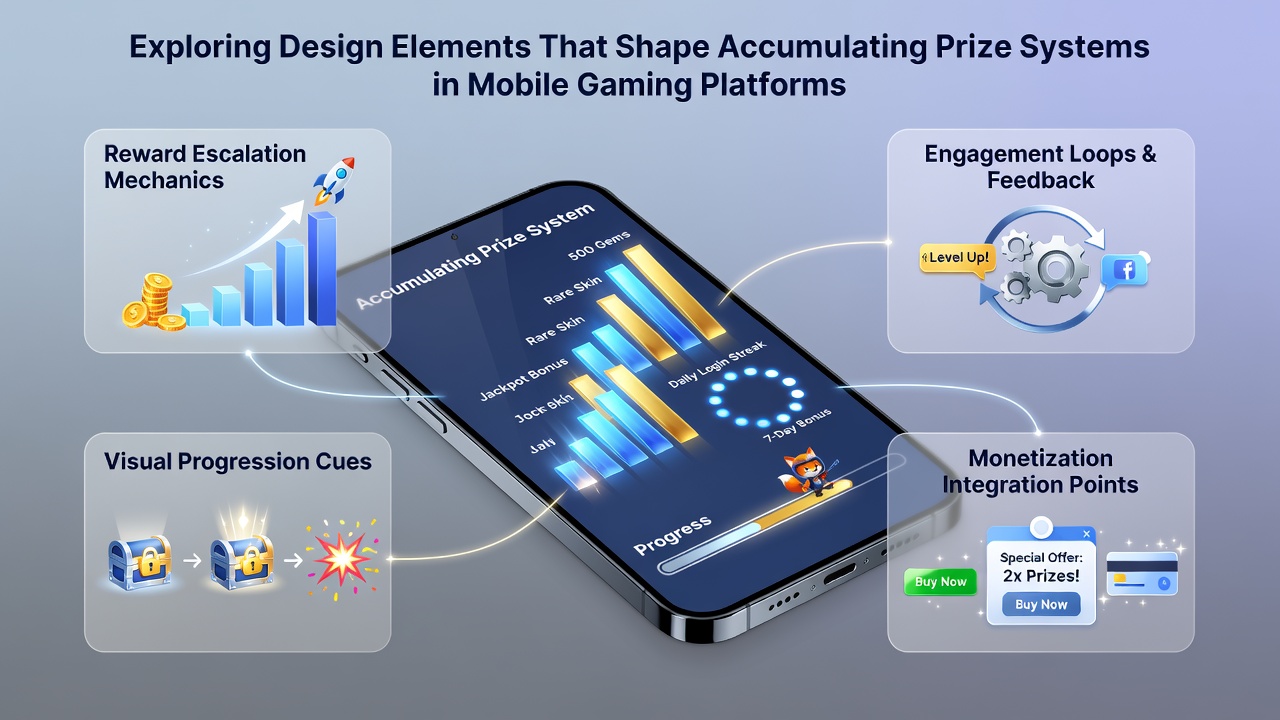
Design elements in mobile gaming platforms directly influence how accumulating prize systems operate and how players interact with them over time, with visual layouts, animation sequences, and touch-responsive features shaping the pace at which prize pools build and distribute rewards. These components work together to create pathways for prize accumulation that rely on consistent user engagement patterns across different devices and operating systems.
Core Visual Indicators and Their Role in Prize Tracking
Progress bars and meter displays form the foundation of most accumulating prize systems because they provide immediate visual feedback on contribution levels and overall pool growth, while color gradients and fill animations signal incremental changes without requiring players to navigate away from the main game screen. Researchers studying interface patterns in October 2026 noted that platforms using layered visual hierarchies tend to sustain longer interaction sessions compared to simpler static displays, according to data compiled by the Canadian Gaming Association. Such designs often incorporate real-time updates that reflect contributions from multiple users simultaneously, which helps maintain transparency in networked prize environments.
Font sizing and icon placement further guide attention toward key metrics like current pool totals and personal contribution percentages, with larger numerals positioned near the top of the interface drawing focus during quick gameplay sessions. Studies from academic institutions have shown that these placement decisions correlate with higher redemption rates in systems where users can track accumulation without excessive menu diving.
Animation Sequences and Feedback Loops
Animated transitions during prize contributions create a sense of momentum that encourages repeated actions, as subtle particle effects or expanding meter animations respond directly to each input from the player. These sequences connect individual moves to the broader accumulation process, turning isolated taps into part of a collective buildup that spans across thousands of concurrent sessions. Observers note that platforms employing variable animation speeds based on contribution size often see steadier engagement curves throughout the day, particularly when updates align with peak usage windows in different time zones.
Sound cues paired with visual changes add another layer, reinforcing the connection between user actions and prize growth through short audio bursts that vary in pitch or duration depending on the scale of the addition. Data from industry reports indicates these multimodal signals help users maintain awareness of their progress even when glancing at the screen intermittently during other activities.
Touch Interactions and Gesture Integration
Gesture controls such as swipes and holds allow players to adjust contribution amounts or trigger bonus multipliers that feed into the accumulating prize pool, with responsive hit zones and pressure sensitivity adding precision to these inputs on modern touchscreens. This direct manipulation reduces the steps needed to participate in prize systems, which in turn streamlines the flow from individual decisions to collective outcomes. Experts examining handheld platforms have documented how gesture-based designs minimize interruptions in momentum, especially when combined with haptic feedback that confirms successful entries without visual confirmation alone.
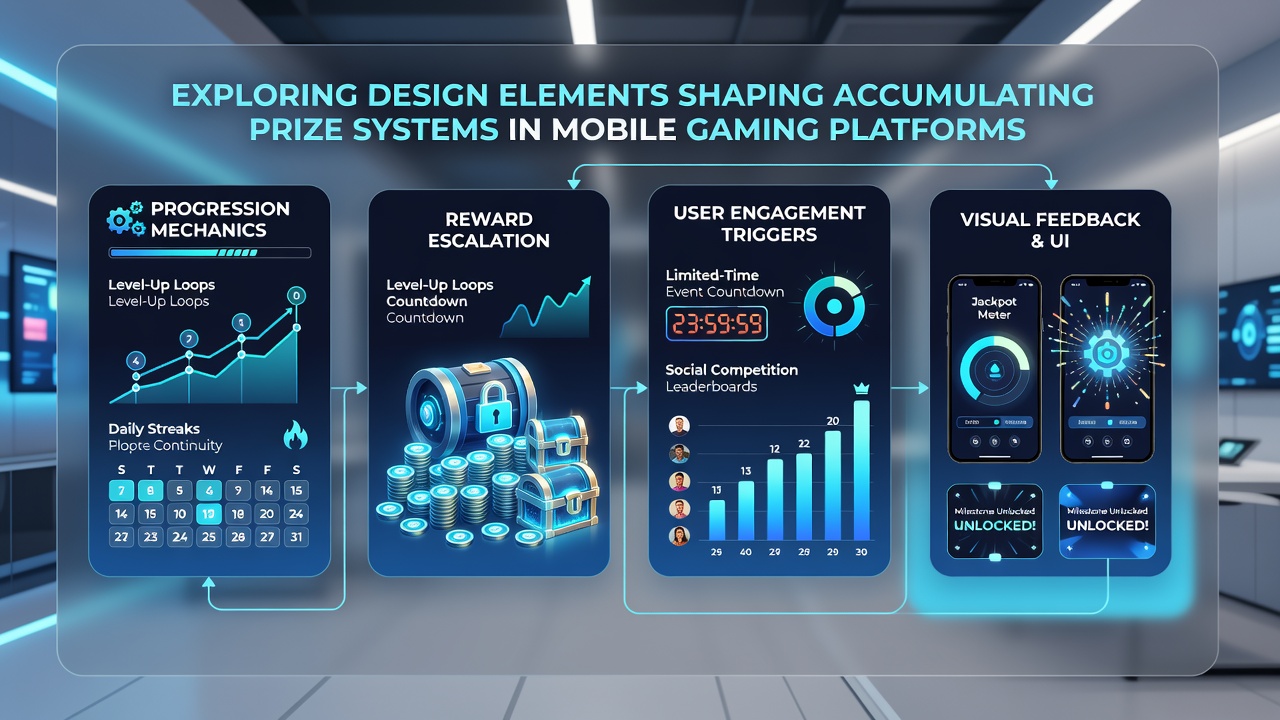
Layout adaptability across screen orientations ensures that these interactions remain consistent whether users hold devices in portrait or landscape mode, preventing disruptions in prize tracking during natural shifts in usage posture. Reports from the Australian Communications and Media Authority highlight alignment between such adaptive interfaces and sustained participation levels across diverse user demographics.
Cross-Platform Synchronization and Data Flow
Design consistency across iOS and Android environments supports seamless prize accumulation even when players switch devices mid-session, with cloud-synced progress indicators updating without lag that could otherwise break the sense of ongoing contribution. This technical integration relies on backend structures that mirror front-end visual elements, allowing real-time pool adjustments to appear uniform regardless of hardware variations. Those who've analyzed these systems point out that synchronization delays above certain thresholds correlate with drops in repeat engagement, underscoring the importance of responsive design choices.
Conclusion
Interface components ranging from visual meters to gesture responses collectively determine the effectiveness of accumulating prize systems by guiding user behavior and maintaining continuity across sessions. As mobile gaming continues to evolve through 2026 and beyond, these design decisions remain central to how prize pools form and distribute rewards across global player bases.